The serpent on the staff: the flag of the WHO
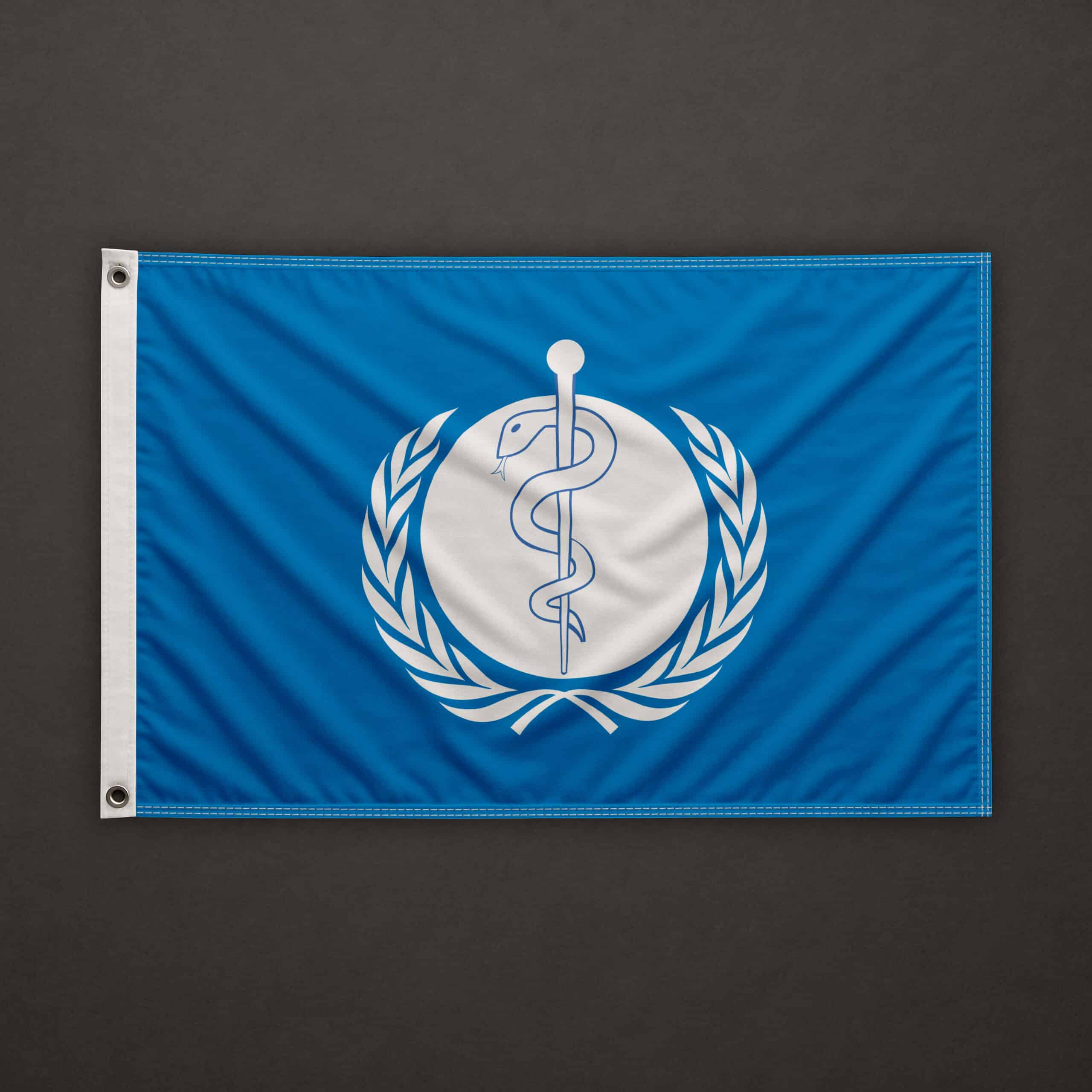
On a light blue field, a white disc with a staff and a serpent coiled around it, framed by two laurel branches: the emblem of the World Health Organization, the WHO, known in Italian as OMS. The staff with the serpent is the attribute of Asclepius, the Greek god of healing.
The rod of Asclepius
Asclepius was the Greek god of healing and the medical arts, and his best-known sanctuaries were at Epidaurus and on Kos. His staff with a single serpent, and no wings, is read as a sign of renewal, since the serpent sheds its skin, or of the double nature of drugs, which can heal or harm. It is not the caduceus of Hermes, which has two serpents and two wings.
From 7 April 1948
The WHO constitution came into force on 7 April 1948, the first World Health Day, when the twenty-sixth member state ratified it. The WHO took over the mandate of the League of Nations Health Organization. When the first World Health Assembly ended, on 24 July 1948, it had secured a budget of 5 million US dollars for 1949. Its headquarters are in Geneva and today it has 193 member states.
Work you can see
In 1979 a Global Commission declared smallpox eradicated, and in 1988 the Global Polio Eradication Initiative was launched, which has brought polio close to eradication.
The organisation's flag
The light blue is taken from the colours of the United Nations, of which the WHO is a specialised agency. The WHO flag code of January 1982 provides for sizes of 2 by 3 or 3 by 5, or the proportions of the host country's flags, with the emblem half the height of the hoist.
Who chooses it
For doctors, nurses and hospitals, for health volunteer associations, for medical schools and universities, for public health conferences and model UN events, for collectors of flags of international organisations. We sew it to order, in the size and fabric you choose above, and you see the delivery date before you pay.