The mother pelican: the Louisiana flag
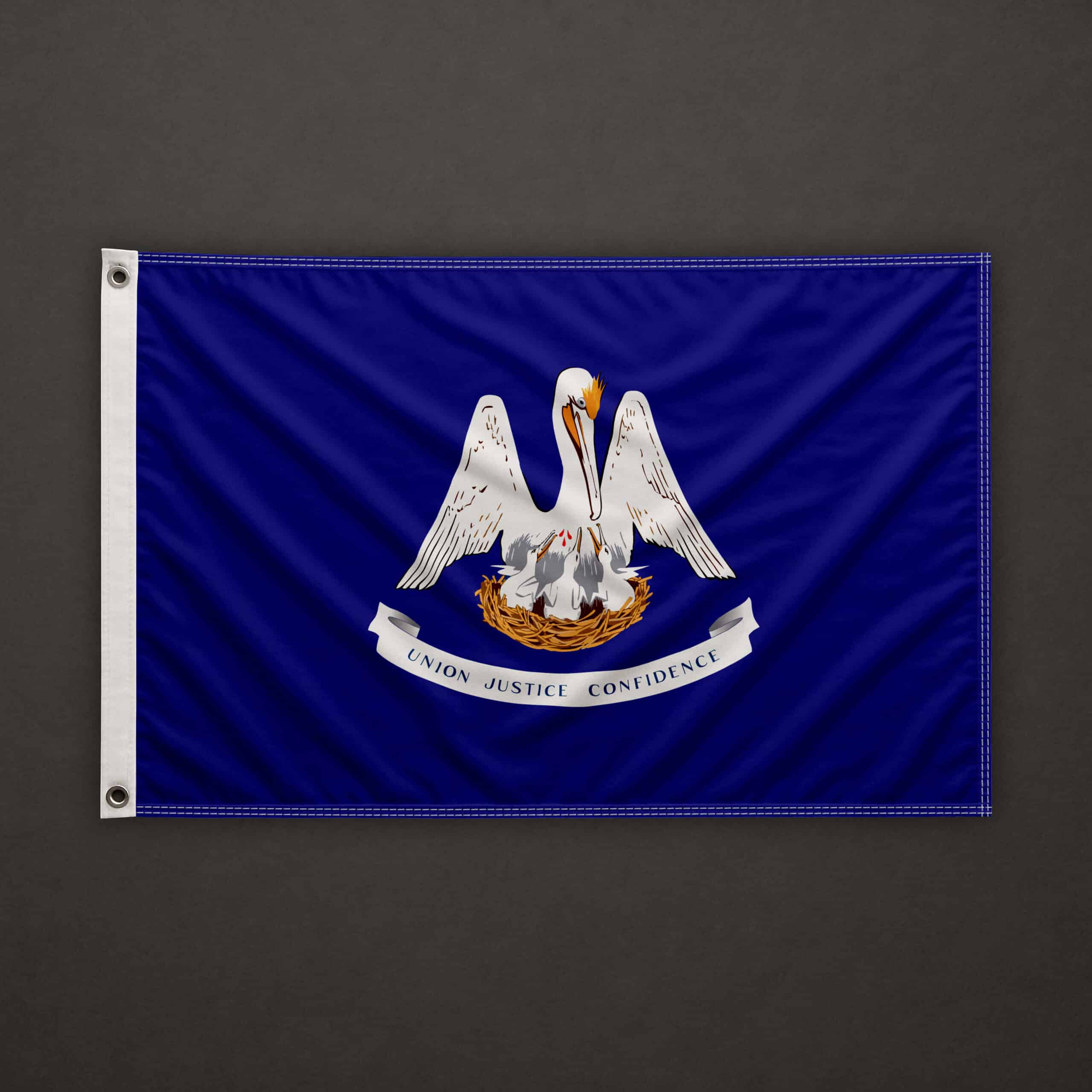
The flag of Louisiana is blue, with a white mother pelican in the centre feeding her three young in the nest. Below, a white ribbon with the state motto: «Union, Justice, Confidence». It is one of the most moving flags in America, because it tells of an act of love.
A symbol of sacrifice
The pelican on the flag wounds her breast with her beak to feed her young with her own blood: in heraldry this is called a «pelican in her piety». It is an ancient symbol of self-sacrifice. For Louisiana it stands for the willingness of the state to sacrifice itself for its citizens.
From the seal to the flags
It was Governor William C. C. Claiborne who, after Louisiana became a state in 1812, replaced the eagle on the state seal with the pelican. From 1812 the pelican also appeared on uniform buttons and militia colours, and over the years it found its way onto all sorts of flags, some red, others blue.
1 July 1912
The pelican flag was officially recognised by law on 1 July 1912: a blue field with the state coat of arms in white in the centre and the motto on a ribbon. The law says it shall fly every day, from sunrise to sunset, over the State Capitol and the state's public buildings.
Three drops of blood
Joseph Louviere, an eighth-grader from Houma, researched the flag for a school project and found that the drops of blood, present in the earliest descriptions, appeared on the flags only inconsistently. He wrote to his state representative, and in 2006 a law required the pelican to show three drops of blood. On 22 November 2010 the new flag was unveiled: the version you see here.
Who chooses it
For anyone who has spent Mardi Gras in New Orleans, for lovers of jazz and Cajun cooking, for anyone with roots or friends in Louisiana, for a business that works with Louisiana, for collectors of American flags. We sew it to order, in the size and fabric you choose above, and you see the delivery date before you pay.