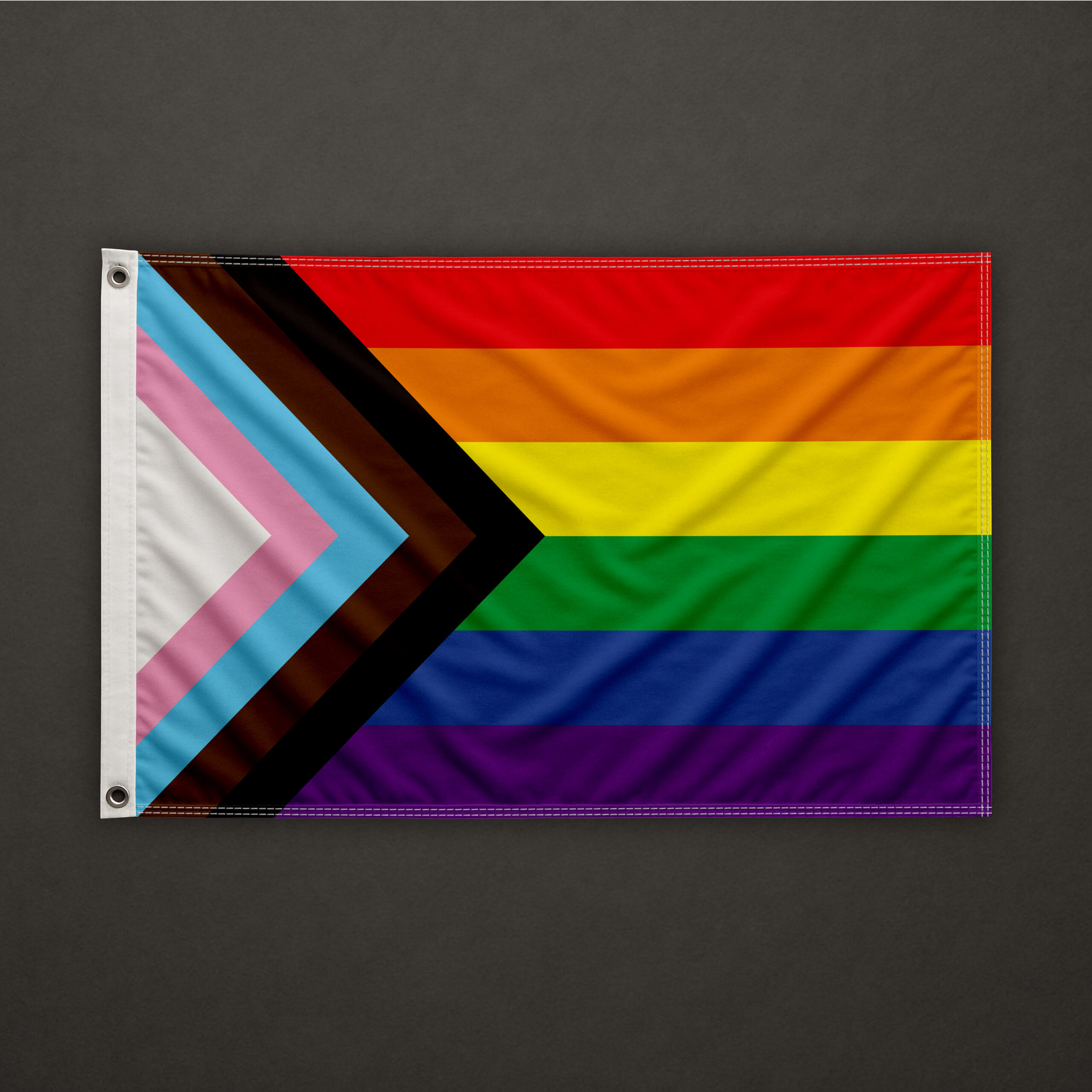
The rainbow with a chevron: the Progress Pride flag
Six horizontal stripes, from the top red, orange, yellow, green, blue and purple, with an arrow-shaped chevron along the hoist. The chevron has five bands, from the inside out: white, pink, light blue, brown and black.
Designed by Daniel Quasar in 2018
According to Wikipedia, the Progress flag was designed in 2018 by Daniel Quasar, an American non-binary queer artist and graphic designer. It updated the flag to include the colours of the flags designed by AJ Hikes (2017, with black and brown stripes) and by Monica Helms (the transgender flag). Quasar wrote that the new design «forces the viewer to reflect on their own feelings towards the original Pride flag and its meaning».
What the chevron stands for
The white, light blue and pink bands represent transgender people, and the brown and black bands represent people of color and the anti-racism movement. Wikipedia adds that the black stripe was previously used for those living with, or lost to, HIV/AIDS, in the Victory over AIDS flag of the 1980s. Wikipedia's article on the rainbow flag adds that the arrow points to the right to show forward movement, while sitting on the left edge shows that progress still needs to be made.
Where it is flown
Wikipedia notes that Progress flags are seen at LGBTQ parades, at events during Pride Month and on commemorative dates such as International LGBTQ Pride Day, and have been used by companies and entities such as Microsoft and the São Paulo Museum of Art. This is the 2018 version, without the intersex triangle that was added in 2021.
Who chooses it
For LGBTQ people and their families, friends and allies, for Pride marches, schools, universities, associations and workplaces, for councils, libraries, shops and venues that want to show inclusion, and for anyone who wants a Pride flag that carries more of the community. We sew it to order, in the size and fabric you choose above, and you see the delivery date before you pay.